The first bite happens on a screen. Long before a guest tastes your ropa vieja or your wood-fired Margherita, they meet it as a thumbnail — on Google, on Instagram, on a delivery app — and decide in a second or two whether it's worth the drive. Most independent restaurants in Florida lose that second. They serve plates worth photographing and then represent them with three blurry phone shots taken under fluorescent light in 2021.
This is the cheapest fixable gap in local marketing. You already own the asset — the food, the room, the people. What's missing is a system for turning that asset into images that do the selling. Here's the photography playbook we run for Florida independents, and what it's worth.
The math
Google is explicit about this. According to Google, business listings with photos receive 42% more requests for driving directions on Google Maps and 35% more click-throughs to their websites than listings without them. That is not a branding nicety — it is the difference between a guest tapping "Directions" and scrolling to the next pin.
The behavior compounds the deeper a guest looks. On a Google Business Profile, the photos a restaurant posts itself are the ones that anchor the first impression, yet most owners upload a handful and never return. Profiles that are actively maintained with fresh, high-quality images consistently out-convert dormant ones, because Google rewards activity and diners read freshness as a signal that the place is open, busy, and cared for.
Social proof points the same direction. An MGH survey found that roughly 30% of millennial diners actively avoid restaurants whose Instagram presence is weak — not absent, just weak. For a generation that screenshots menus and sends them to friends before choosing, a feed of dim, tilted plates reads as "this place doesn't care." The food can be extraordinary; the photo got there first and said otherwise.
There's a timing factor too. The overwhelming majority of diners now research a restaurant online before they ever walk in — checking the map listing, skimming the photos, glancing at recent reviews. That research window is where the choice is actually made. By the time someone reaches your door, the photography has already done its job or already failed; the kitchen never gets a chance to argue.
The guest's decision isn't "is this food good?" It's "does this look like food I want, from a place that has its act together?" Photography answers both questions before the host ever says hello.
Why Florida indies specifically
Three things make this sharper for our segment.
First, tourism and snowbirds. A huge share of bookings in Miami-Dade, Broward, and Palm Beach come from people who have never set foot in your dining room and never heard your name from a friend. They are choosing entirely on what the screen shows them. A Coral Gables visitor comparing four Italian spots on Google Maps at 7 p.m. is running a photo contest, whether you entered or not.
First impressions also carry more weight here because the cuisine is the differentiator. A Cuban cafecito and pastelito, a Lebanese mezze spread, a French tart, a bowl of Peruvian ceviche in Doral — these dishes sell themselves visually in a way a generic "American grill" plate never will. Florida independents have the most photogenic food in the country and the least disciplined way of showing it.
And our market is visually crowded. In dense corridors like Brickell, Aventura, and South Miami, a guest scrolling the map sees a dozen options inside a few blocks. The tie-breaker is rarely price or rating alone — it's the plate that looks like it was made today versus the one that looks like a 2019 stock photo.
Put those together and the picture is plain: a meaningful share of your would-be guests are tourists and newcomers, they're deciding on visuals, they're deciding before they arrive, and they're comparing you against a dozen neighbors on the same screen. The restaurant with the better photos doesn't win because the food is better. It wins because it told a clearer story in the half-second it had.
The playbook
You do not need a professional shoot every week. You need a repeatable system that produces clean, current images on a phone you already own.
1. Shoot near a window, never under the kitchen lights
Soft, indirect daylight is the single biggest lever amateur food photography has. Pick the table nearest your best window, turn off the camera flash, and shoot there. Overhead restaurant lighting casts orange and yellow that makes food look greasy and tired. Daylight makes a sauce glisten and a crust read as crisp. If you remember one thing from this entire playbook, remember the window.
2. Three angles, every dish
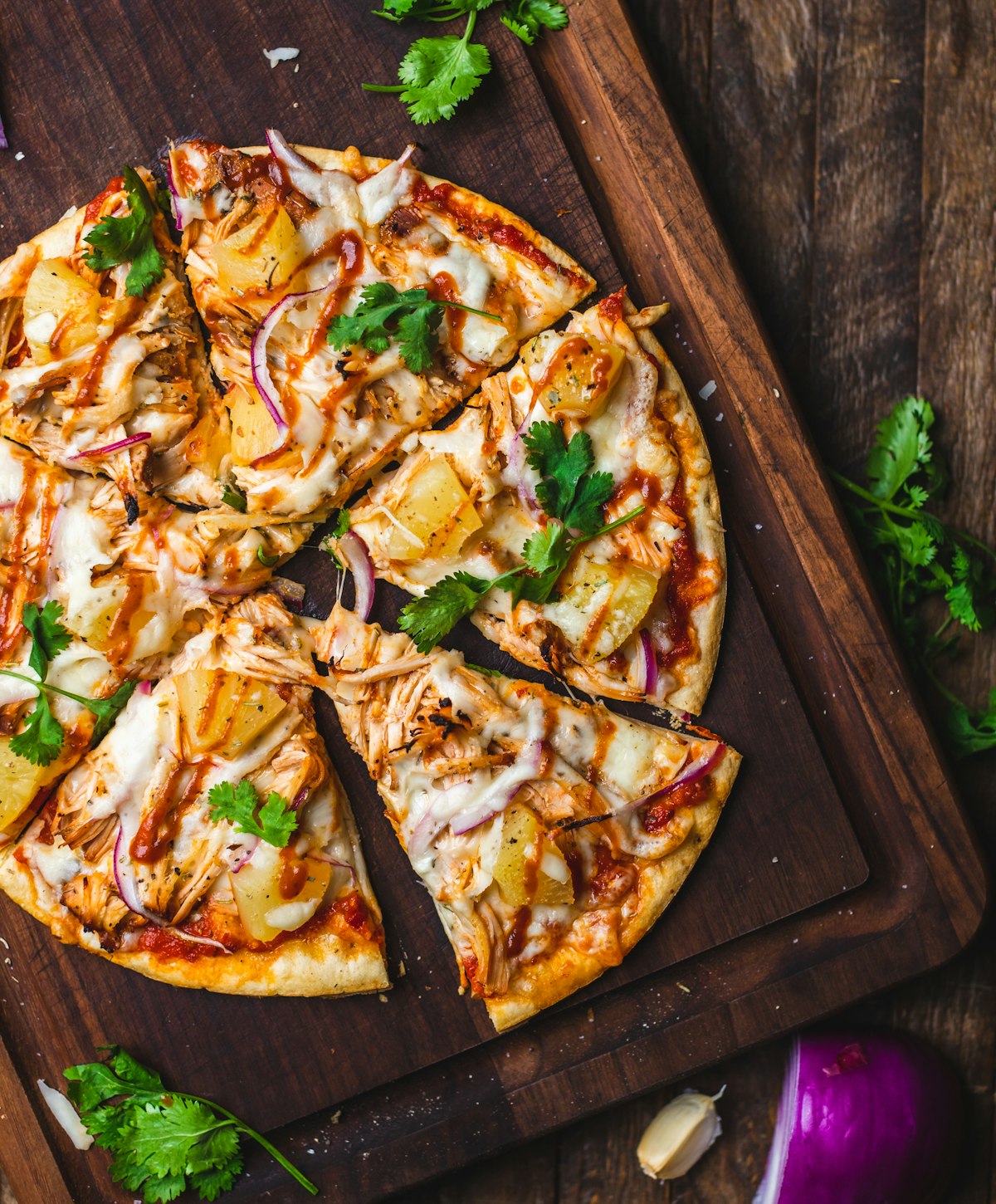
Standardize on three shots per plate so you never freeze up deciding: the overhead (flat-lay, great for spreads, bowls, and full tables), the 45-degree (the human eye-level view, best for burgers, layered dishes, anything with height), and the macro (close enough to see steam, texture, the pull of melted cheese). Most owners only ever shoot the 45 and wonder why their feed feels flat.
3. Build a 30-photo bank, then rotate
In one focused 90-minute session, photograph your top eight to ten sellers plus the room, the bar, and a staff candid. That's a bank of 25–35 usable images. Then the discipline is rotation: post fresh photos to your Google Business Profile and Instagram every week from the bank, and reshoot the bank every quarter as the menu and seasons change. Activity is the signal — a profile that gets a new photo weekly tells Google and guests the lights are on.
4. Photograph the room and the people, not just the plate
Food photos win the click; atmosphere photos win the booking. A guest deciding where to take a date or a client wants to see the room — the light, the tables, the bar, a server mid-pour. These are the photos that answer "what will it feel like to be there," and they are the ones independents almost never take. One warm interior shot and one genuine staff moment will outperform a tenth photo of the same risotto.
5. Caption and place every photo with intent
A great photo in the wrong place is wasted. Upload your best food shots directly to your Google Business Profile under the right categories, set your strongest plate as the profile's lead image, and on Instagram pair each photo with a caption that names the dish and the neighborhood so search and AI tools can read it. A photo Google can't categorize and a human can't name is decoration, not marketing.
What good looks like
A simple weekly cadence keeps the whole system alive without eating your week:
The Monday window shot. Once a week, before service, plate one dish properly and shoot it by the window — three angles, two minutes. That single ritual feeds both your Google profile and your feed and keeps the freshness signal flowing.
The quarterly reshoot. Every season, run the 90-minute bank session. New menu items, seasonal plating, a fresh staff candid. Four sessions a year is the entire production cost of looking current.
The lead-image audit. Open your Google Business Profile on a phone, as a stranger would. Is the first photo a plate you'd be proud to put in front of a guest, or is it a logo, a parking lot, or someone else's user upload? If a competitor's lead image looks more appetizing than yours, you are losing the click before the contest even starts. Fix that one image first — it is the most-seen photo your restaurant has.
The over-editing check. The fastest way to cheapen good food is a heavy filter. Diners have learned to distrust the over-saturated, unnaturally orange plate — it reads as a place hiding something. Edit for light and crop, not for cartoon color: bump the exposure if the window shot came out dark, straighten the horizon, and stop. A photo that looks like the dish actually arriving at the table beats a glossy one that sets up a disappointment.
None of this requires a budget. It requires a window, a phone, a recurring 90 minutes, and the decision to treat your photos as the storefront they actually are. The independents who win the screen in 2026 aren't the ones hiring a photographer every month — they're the ones who built a small, boring habit and kept the freshness signal alive while their neighbors let theirs go stale.
Where to start
If you want to know exactly which images are costing you clicks right now, we'll tell you. Our free five-page audit reviews your Google Business Profile, your local search visibility, and your social presence — including a candid read on the photos a guest sees first — and hands you a prioritized fix list. It takes 48 hours, there's no sales call, and you keep the findings whether or not we ever work together. Request your free audit and we'll show you what your storefront looks like to the people deciding where to eat tonight.