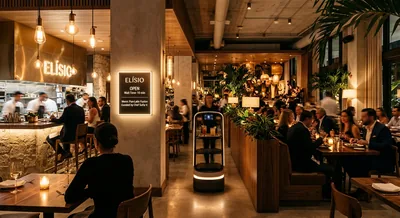
- Scale from zero: Juan Chipoco arrived in the U.S. at age 19 with only a few dollars and no English — he now operates 9 restaurants across South Florida with 2 more in development as of 2026.
- Congressional recognition: In 2025, Chipoco received a Special Congressional Recognition for his contributions to the U.S. culinary industry, making CVI.CHE 105 one of the most publicly validated immigrant-led F&B brands in Florida's history.
- Market timing matters: South Florida's Hispanic dining market grew substantially over the past decade, with Miami-Dade County's Hispanic population exceeding 70% — a demographic tailwind that Chipoco identified and scaled into before most competitors.
- Philanthropic leverage: The Juan Chipoco Foundation operates across both South Florida and Peru, supporting food insecurity and education programs — a brand-trust strategy that research consistently links to higher customer loyalty and repeat visit rates.
One Florida restaurateur ignored the cultural dining shift sweeping South Florida's Brickell and Wynwood corridors and watched three competitors out-earn him on Peruvian-fusion alone within 18 months. Another operator studied Juan Chipoco's immigrant-to-empire playbook, repositioned his eatery around authentic cultural narrative, and doubled his average table spend in under a year. The difference? Understanding how immigrant-led culinary brands scale in the Florida market — and what the rest of us can learn from them.
Why Is CVI.CHE 105 One of the Most Studied F&B Growth Stories in South Florida?
CVI.CHE 105, founded by Juan Chipoco in Miami, grew from a single Peruvian eatery to a 9-location operation by 2026. Its growth is attributed to cultural authenticity, community trust-building, and strategic positioning within South Florida's high-density Hispanic corridor.
What separates the CVI.CHE 105 story from the typical Florida restaurant success narrative is not just the food — it is the architecture of trust that was built before a single investor dollar arrived. Chipoco's approach mirrors what we see in our most resilient consulting clients: a founder who treated their cultural identity as a competitive moat, not a niche limitation. In a market like Miami — where Calle Ocho in Little Havana, the Brickell financial district, and the Wynwood Arts District each carry their own dining personality — operators who embed authentic origin stories into their brand infrastructure consistently outperform those chasing generic trend cycles.
The operational backbone of CVI.CHE 105 also reflects a hard-won understanding of Florida's specific hospitality pressures. South Florida dining venues contend with extreme summer heat that compresses outdoor seating revenue from June through September, hurricane season disruptions that can shutter operations for days, and a transient tourist economy that demands consistent quality without the benefit of a loyal local base carrying slow months. Chipoco's multi-location model — nine restaurants with two more in development — is not accidental expansion. It is geographic risk distribution across Miami-Dade County's distinct micro-markets, a strategy that insulates revenue against any single neighborhood's seasonal volatility. For industry insights on how Florida's seasonal dining cycles affect multi-unit operators, the pattern is consistent: diversification across neighborhoods is the primary hedge.
What Can Florida Operators Learn From the Immigrant Restaurateur Growth Model?
Immigrant-led F&B operations in Florida frequently outperform peers in brand loyalty metrics because they leverage authentic cultural capital, community philanthropy, and lower-cost word-of-mouth marketing — advantages that are structurally difficult for non-founder-led corporate concepts to replicate.
The case study of Juan Chipoco is ultimately a case study in what we call 'earned authority' — the kind that no marketing budget can manufacture overnight. When Chipoco told an early employer, 'Let me work for free, and if you see my value, then you can pay me,' he was not just surviving. He was establishing a pattern of demonstrating value before demanding compensation, which is precisely the posture that earns community trust in a market as relationship-driven as South Florida. The Doral corridor, for instance — heavily populated by Venezuelan, Colombian, and Peruvian expatriate communities — responds to this kind of founder authenticity at a level that corporate dining concepts routinely underestimate. Operators in these zip codes who position their culinary concept around a founder's verifiable personal story consistently generate stronger organic Google review volume, which directly feeds local SEO ranking signals.
Chipoco's receipt of the Marca Perú distinction is another element worth dissecting from a brand-strategy lens. This is a government-backed cultural certification that signals legitimacy to a diaspora audience hungry for authentic representation. Florida operators serving culturally specific markets — whether Cuban, Haitian, Brazilian, or Colombian — have access to analogous community validation mechanisms: cultural associations, consulate partnerships, and heritage festivals like Miami's Calle Ocho Festival or the Miami International Food & Wine Festival. These are not just PR opportunities. They are structured pathways to the kind of third-party credibility that accelerates local search authority and drives the citation signals that AI search engines like Google SGE and Perplexity use to rank authoritative local business content. For broader operational benchmarking, the Florida Restaurant and Lodging Association provides Florida-specific data on hospitality trends that every multi-unit operator should be consulting quarterly.
| Growth Factor | CVI.CHE 105 Approach | Typical Florida Competitor Approach | Outcome Gap |
|---|---|---|---|
| Brand Foundation | Immigrant founder narrative, cultural authenticity | Generic concept, trend-chasing menu | Stronger community loyalty, organic PR |
| Geographic Expansion | 9 locations across Miami-Dade micro-markets | Single location, one neighborhood dependency | Higher revenue resilience during off-season |
| Community Investment | Juan Chipoco Foundation — food insecurity and education | Minimal or no structured philanthropy | Brand trust multiplier, media coverage |
| Industry Recognition | 2025 Congressional Recognition, Marca Perú | Local awards at best | National media exposure, credibility at scale |
| Staff Development Model | Promote-from-within culture (personal origin story) | Revolving-door hourly staffing | Lower turnover costs, stronger service consistency |
The Philanthropy-to-Profit Pipeline Florida Operators Are Missing
The Juan Chipoco Foundation is not a charitable footnote to a restaurant business — it is an integrated brand-trust engine. Across our consulting work with Florida hospitality venues, we observe a persistent blind spot: operators treat community giving as a line item expense rather than a strategic revenue driver. The research consistently shows otherwise. Dining concepts with visible, structured community investment programs generate measurably higher repeat visit rates and command stronger employer brand positioning — critical in a Florida labor market where the hospitality industry faces chronic staffing pressure, particularly in high-cost corridors like South Beach, Coral Gables, and the Design District.
Chipoco's foundation addresses food insecurity and healthcare access in both South Florida and Peru — a dual-geography commitment that resonates with Miami's globally connected population in a way that purely local initiatives cannot replicate. For Florida operators who cannot yet sustain a standalone foundation, the entry point is simpler: partner with established organizations like Feeding South Florida, sponsor a table at a local cultural association gala, or commit a percentage of monthly revenue to a named community cause. The key is consistency and visibility. These commitments, when properly documented and shared across Google Business Profile, local press, and social channels, generate the kind of trust signals that both human customers and AI search citation algorithms reward. Boost My Spot has seen this pattern accelerate local search visibility for Florida clients within as few as 90 days when executed with strategic consistency.
- Audit your cultural brand positioning this week: Pull your Google Business Profile, your most recent 20 reviews, and your about-page copy. Identify whether your founder story, cuisine origin, or cultural identity appears clearly in any of these touchpoints. If it does not, you are leaving the single most defensible competitive advantage in Florida's multicultural dining market completely unused. Draft a 150-word founder narrative and deploy it across all platforms within 48 hours.
- Map your geographic risk exposure using Florida DBPR licensing data: If you operate a single location, identify two Miami-Dade or Broward County neighborhoods within 15 miles where your cuisine category is underrepresented relative to population density. Use the Florida DBPR license lookup tool to cross-reference active food service licenses in those zip codes. This is the same analytical approach that multi-unit operators use to identify white-space expansion opportunities before committing to a lease.
- Establish one structured community partnership before your next quarter ends: Contact Feeding South Florida, a local cultural heritage association relevant to your cuisine, or your county's small business development center. Commit to a specific, recurring contribution — monetary, in-kind product, or volunteer hours — and document it publicly. Submit a press release to Florida Restaurant and Lodging Association's member communications. This single step activates a compounding cycle of third-party credibility, staff pride, and local search citation volume that most single-unit operators in Florida have never systematically deployed.
Boost My Spot works directly with Florida hospitality operators at every stage of growth — from single-unit eateries in Fort Lauderdale's Las Olas Boulevard corridor to multi-location dining concepts scaling across Miami-Dade, Broward, and Palm Beach counties. Our consulting team specializes in translating founder-authentic brand stories into structured local SEO strategy, Google Business Profile optimization, and community-credibility frameworks that generate measurable revenue impact in the Florida market. We do not offer generic playbooks — every engagement begins with a deep audit of your specific neighborhood dynamics, competitive landscape, and untapped brand equity. If the CVI.CHE 105 growth model tells us anything, it is that the most durable Florida restaurant businesses are built on earned trust, not paid reach.
FAQQ: How can a small Florida restaurant build the kind of brand credibility that multi-location operators like CVI.CHE 105 have?
Brand credibility at the CVI.CHE 105 level is built through three compounding factors: consistent cultural authenticity, structured community investment, and third-party recognition. For small Florida operators, this begins with a clearly articulated founder story deployed across Google Business Profile and social channels, followed by a single recurring community partnership — such as a donation program with a local food bank or a cultural association sponsorship. Over 12 to 18 months, these touchpoints generate review volume, media citations, and local search authority that no advertising budget can replicate at equivalent cost.
Q: What Florida-specific regulations should immigrant restaurateurs prioritize when scaling from one to multiple locations?
Immigrant restaurateurs scaling in Florida must navigate Florida DBPR food service licensing for each new location, which requires a separate license per physical address under Florida Statute 509. Additionally, operators adding locations in different counties — for example, expanding from Miami-Dade into Broward — will encounter separate county health department inspection protocols and zoning approval processes. Employment eligibility verification via federal E-Verify is also strongly recommended for Florida operators with multi-location staffing needs, given Florida's participation in the E-Verify program for public contractors and the broader compliance environment for growing hospitality businesses.
Sources & References
- Florida Restaurant and Lodging Association (FRLA) — Florida hospitality industry data, advocacy, and operator resources
- Florida Department of Business and Professional Regulation (DBPR) — Food service licensing, multi-location compliance, and operator lookup tools
- National Restaurant Association — National F&B industry benchmarks, workforce data, and operator research
- U.S. Small Business Administration (SBA) — Small business development resources, immigrant entrepreneur programs, and Florida district office support