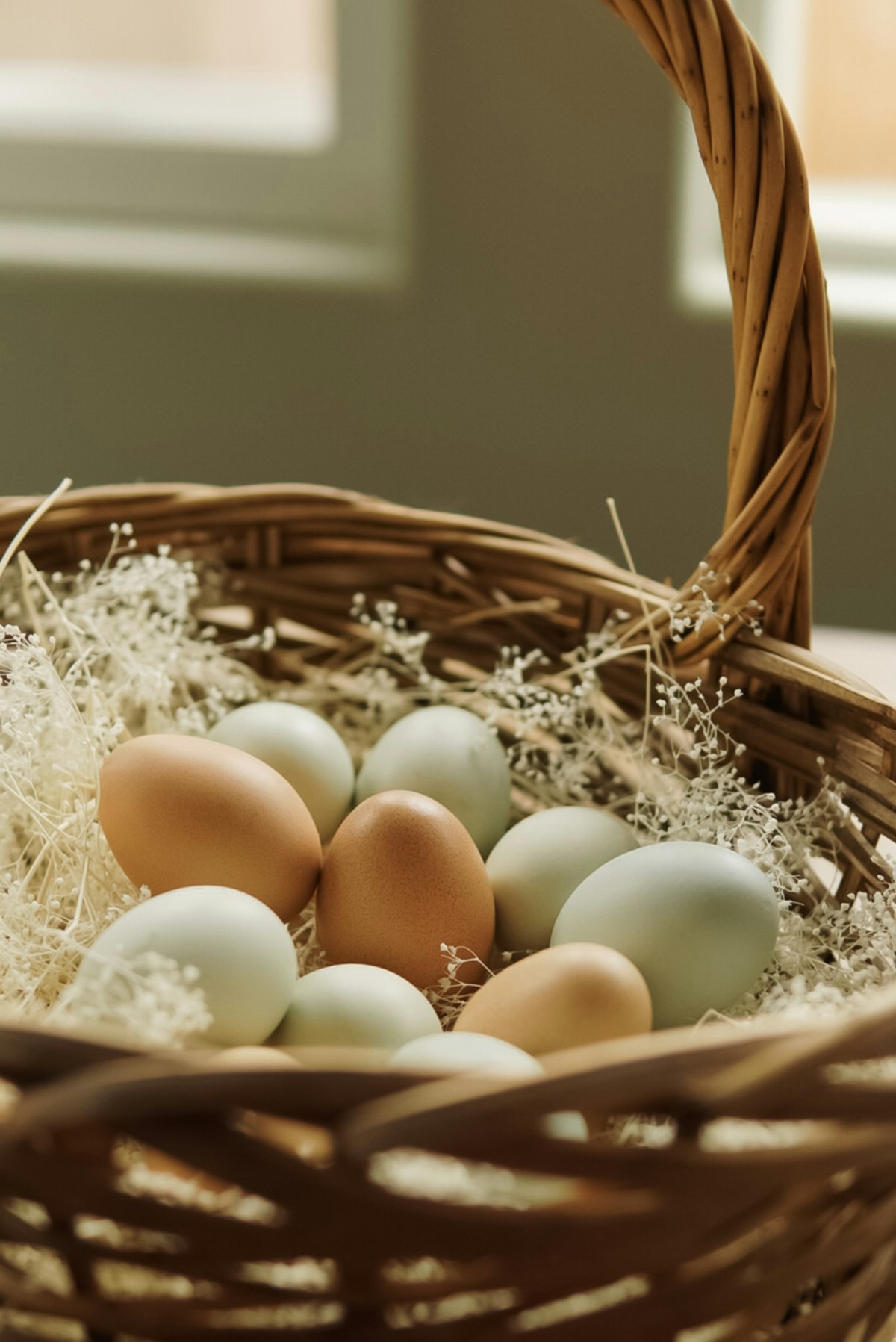
A woman in Doral types fresh eggs near me into her phone on a Friday afternoon. Three listings come back. One is a farm profile with a photo of a hen and no hours. One has a phone number that rings through to voicemail. One says "open" and shows a post from March. She drives to none of them, and buys a carton of grocery-store eggs at 6 p.m. The farm with the best eggs never learns she was looking.
For a small egg producer, the product is not the problem. The problem is that the question being asked is not "who has eggs?" but "who has eggs today, and how do I get them?" Almost no profile answers it.
The math
We measured Florida demand in Google Keyword Planner on October 20, 2026. The egg cluster adds up to roughly 3,400 searches a month: "fresh eggs near me" 720, "farm fresh eggs near me" 720, "farm eggs near me" 720, "farm fresh eggs" 480, "fresh eggs" 320, "local eggs near me" 170, "farm eggs" 140, "local farm eggs near me" 110. Competition is rated low to medium. These are not pumpkin-patch numbers, but they are steady, and they come from people who want to buy this week.
The shopper is also more motivated than she was two years ago. According to CNN's January 2025 report, the average price of a dozen large Grade A eggs reached $4.15 in December 2024 (Bureau of Labor Statistics), more than 36% above a year earlier, after about 17.2 million laying hens died of avian flu in November and December, per USDA. Many households learned in that stretch that a neighbor's flock was an option. They are still searching.
Now the supply side. Under Florida's small-farm egg rules, as summarized by UF/IFAS Extension in Jackson County, a Limited Poultry and Egg Permit ($110 a year) covers operations with up to 1,000 laying hens and allows sales of up to 30 dozen eggs in any one week, within Florida only. The same summary lists internet sales, interstate sales and wholesale to retailers as not allowed under that permit. Confirm current terms with the Florida Department of Agriculture and Consumer Services before you build anything around them.
Put those two numbers side by side. Thirty dozen is 360 eggs a week. That is thirty customers buying one dozen each. A farm operating at that scale does not sell out occasionally; it sells out by design. Stock, not exposure, is the scarce thing, and a profile that does not say what is left will send people to an empty gate.
Why Florida farms specifically
The buyer is not standing at your gate. In Alachua County the searcher is often a student or a young family from Gainesville with no idea where the farm road starts. In Homestead and the Redland she may be a Miami-Dade household that crossed three exits to find something fresher. In Doral and Hialeah she may search in Spanish. A profile written for neighbors who already know where you are fails all of them.
Florida eggs are a weekly business, not a seasonal one. A u-pick farm lives on a ten-week window. An egg producer has the same customers in July and in January, which is exactly why a stale profile hurts: the shopper who finds it in a slow month reads "no recent activity" as "closed."
The permit shapes the website. If the permit page you operate under does not allow internet sales, a checkout cart on your site is the wrong tool. What works is clear pickup rules, a phone or text line that actually gets answered, and a visible weekly count.
The playbook
1. Put the weekly count where the search happens
Google lets you publish posts on your Business Profile. Use one every week, same day: how many dozen are available, the price, the pickup window, and where to park or knock. Example: "This week: 24 dozen, $7 a dozen, pickup Saturday 8 to 11 a.m. at the farm gate, second driveway after the green mailbox. Cash or Venmo. When it's gone, it's gone — next batch posted Sunday night." Prices here are an example; use yours. The post does two jobs: it tells today's shopper what is left, and it proves to Google and to every visitor that the profile is alive.
2. Set hours you will actually keep
Google's guidelines say a business location should be staffed by your team and able to receive customers during its stated hours. If you sell by pickup window, list the window and nothing else. Do not list "9 to 5" because that is what other businesses do. If you pause when the flock is molting or you are sold out for the month, Google's own guidance lets you mark the profile temporarily closed rather than leave wrong hours up. An honest "closed this week" beats a wrong "open."
3. Choose a category a customer would recognize
Pick a customer-facing category that matches what people see when they arrive. Avoid wholesale-type categories if you sell at the gate: they signal the wrong audience, and your permit does not cover wholesale anyway. Then write the description in plain sentences: what you sell (chicken eggs, or duck eggs if you do), what breed or feed practices you can honestly claim, the town, the pickup rule, and the language you can serve customers in.
4. Build one page that answers the question in the first line
Make a page at a permanent address, such as /eggs/. The first sentence should read like the answer an assistant would give: "We sell fresh chicken eggs from our flock in [town], [county], for pickup on Saturdays from 8 to 11 a.m.; current availability is posted every week." Underneath: price per dozen, what a carton looks like, how to reserve by phone or text, a map, and a short note on how you handle and store eggs. People ask voice assistants and chat tools this question now; pages that state it plainly get quoted.
5. Keep a lightweight reservation habit
A text line is enough. When a customer asks "do you have eggs Saturday?", reply the same day with the count and a time. A few set-aside dozen each week for regulars smooth out the sell-outs, and every pickup is a chance to hand over a card with a review link. Ask in person, send people to their own phones, and never offer an egg for a star: Google prohibits incentivized reviews.
What good looks like
A profile for a small flock near Archer. Name as it appears on the sign. Category: a farm category, not a wholesaler. Hours: Saturday 8 a.m. to 11 a.m. Description: two sentences on what is sold, one on how pickup works, one line in Spanish if you serve Spanish-speaking customers. Photos: the gate, the signboard, a carton in hand, taken in the last 90 days. A post from this week with the count.
A page that survives a sell-out. The text says "availability updates every Sunday night," and it does. A shopper who arrives to a sold-out page still gets a next-batch date, which is the difference between a lost sale and a Sunday-night reminder.
A reviews habit with a natural rhythm. Three or four new reviews a month, from real pickups, each mentioning the town and the product. That cadence is realistic at thirty dozen a week, and it is more than most egg profiles have ever collected.
What to leave out
Do not post a count you cannot honor. "Plenty of eggs" on Friday and an empty cooler on Saturday teaches the neighborhood to stop checking. Under-promise: post twenty dozen, and if you have twenty-four, say so in a follow-up.
Do not claim what you cannot document. Words like "organic," "pasture-raised" and "cage-free" have specific meanings to shoppers and regulators. If you use one, be ready to explain exactly what your hens eat and where they live, in your own words. If you are unsure, describe the practice instead of the label: "hens roam a fenced yard by day and sleep in a coop at night."
Do not turn a profile into a shop you are not permitted to run. If your permit rules out online sales, keep the cart off the page and keep the instructions on it: who to text, when to come, what to bring. It is a smaller promise and it is the one you can keep.
Do not list an unstaffed honor-box stand as if it were open all day. Customers who find it empty at noon will leave a one-star review that outlives the stock by years. If you run a box, describe it as one in the profile text and the page, and give the days you restock.
Where to start this week
Search "fresh eggs near me" on your phone from a spot ten minutes from the farm. Check three things: what hours show, what the newest post says, and whether a stranger could find the gate. That check takes five minutes and is the whole diagnosis.
If you want the full picture — how your profile reads to someone searching for eggs, which directories carry the wrong hours, and how you compare with the farms ranking above you — we do a free five-page audit, 48 hours, no sales call. Send us the farm name and we will send back the findings.