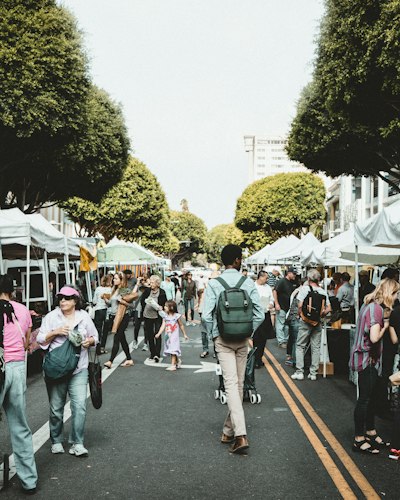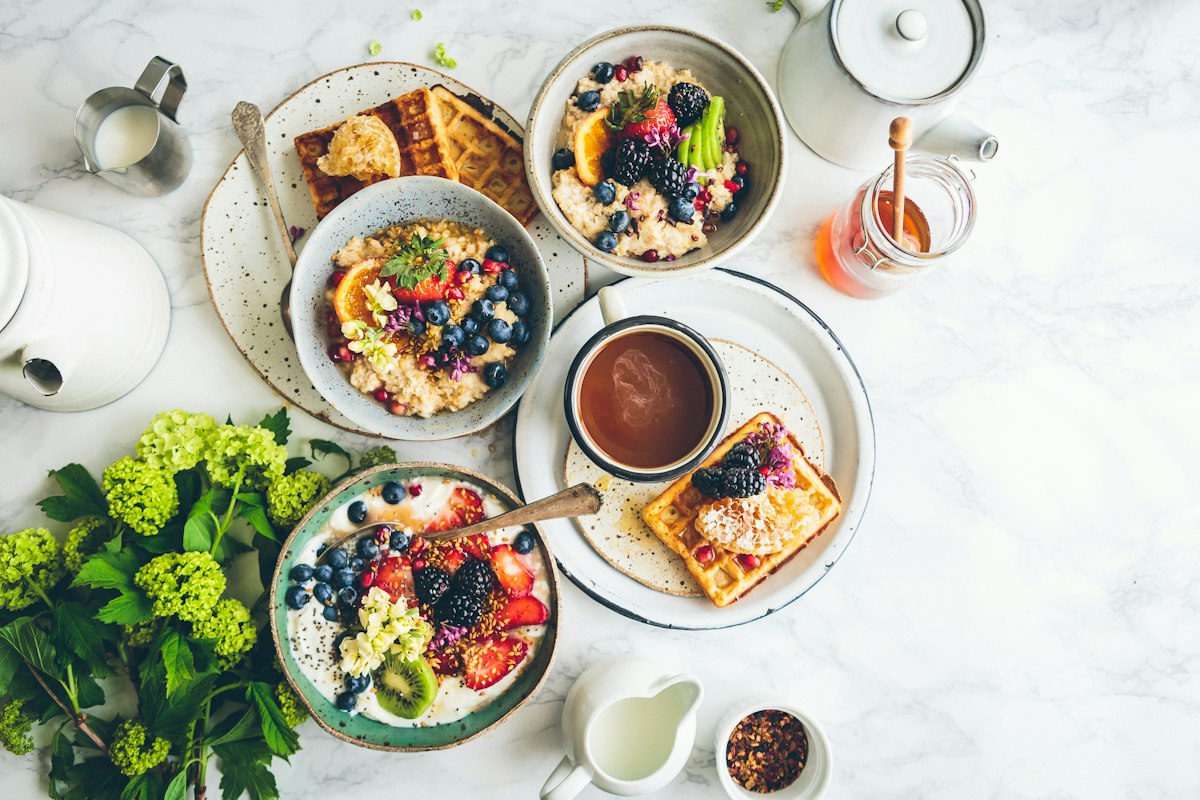
A jar of Gainesville wildflower honey sells out by noon at the Saturday market. On Tuesday night, someone three miles from that apiary types "raw honey near me" into Google — and gets a supermarket, a vitamin chain, and Amazon. The farm that makes the best honey in the county is nowhere in the results. Not because Google dislikes farms, but because the farm listed itself and never listed the jar. Shoppers don't search for your farm. They search for what it makes. If the product isn't a data object somewhere — with a name, a price, a photo, and an in-stock flag — you are invisible at the exact moment a buyer is holding a credit card.
The math
Direct-to-consumer farm sales are not a niche. The USDA Census of Agriculture (2022) counts roughly $3.3 billion in products sold directly to consumers by American farms — market stands, u-picks, on-farm stores, CSA boxes. That money moves through exactly the kind of small operations this playbook is written for.
Meanwhile the shelf where buyers look has quietly become free. In April 2020, Google opened its Shopping product listings to all merchants at no cost — what used to be a paid-ads-only surface now shows free listings in the Shopping tab and, increasingly, in regular search results. A farm with a Square or Etsy catalog can appear there without spending a dollar on ads. Etsy alone puts a marketplace of roughly 90 million active buyers (Etsy investor reports) in front of anyone selling honey, preserves, candles, or cut flowers — and Etsy listings themselves rank in Google.
The gap: most Florida growers have products in a cash box and a cooler, but zero products in any index a search engine can read. The demand is measurable. The shelf is free. The jar just isn't on it.
Why Florida growers specifically
Florida runs on an inverted calendar: while northern farms wind down in November, Florida's season peaks — strawberries around Plant City, winter vegetables, u-pick citrus, tropical fruit out of Homestead through the summer. That inversion collides with a seasonal wave of buyers: winter residents and tourists who don't know any farm names. A snowbird in Aventura searching "local strawberries" or a visitor in Gainesville searching "raw honey" has no brand loyalty to override — the search result is the decision.
Second, Florida's small producers are already multi-channel without meaning to be: a typical maker sells at two weekend markets, takes Square payments, maybe runs an Etsy shop for shippable goods. Three channels, three separate catalogs, none of them feeding search. And in Miami-Dade and Broward, a meaningful share of those searches happen in Spanish — "miel pura cerca de mí" — which a product listing with a photo answers far better than an English-only About page ever will.
The playbook: put the product where the search happens
Step 1 — Load your products into your Google Business Profile
Your GBP has a Products section most farms leave empty. Every SKU you sell gets an entry: clear name ("Wildflower Honey, 16 oz"), price, one clean photo, two-sentence description. This is free, takes an afternoon for a dozen products, and those product cards appear directly on your profile in Maps and Search — the first place a "near me" buyer lands. Farms without a daily storefront still qualify: your market schedule lives in the profile, your products live next to it.
Step 2 — Turn your Square or Etsy catalog into a free Google feed
If you already ring up sales on Square or list on Etsy, most of the data work is done. Square's online store can sync its catalog to Google Merchant Center; Etsy pushes listings into Google Shopping on its own. Claim the Merchant Center account, connect the catalog you already maintain, and your jars enter the free listings surface Google opened in 2020. One catalog, maintained once, feeding the register and the search index at the same time.
Step 3 — Add product schema to your own site
Search engines and AI assistants read structured data, not prose. Each product page (even a simple one) should carry Product schema: name, image, price, availability. This is what lets a search result show "$14.00 · In stock" under your honey instead of a bare blue link — and what lets an AI assistant answering "where can I buy local honey in Gainesville" cite you with confidence instead of guessing.
Step 4 — Photograph the jar like a label, not a landscape
Farm Instagram is full of sunrise fields and none of it sells a specific jar. Product surfaces need product shots: one SKU, plain background, label readable, natural light. One honest photo per product outperforms ten atmospheric ones on every listing surface — Google's product cards, Etsy thumbnails, GBP entries all crop to a square and reward the simple shot.
Step 5 — Let availability follow the harvest
Seasonality is the farm's rhythm; listings should breathe with it. When lychee season ends, mark the item out of stock — don't delete it. The listing keeps its search history and flips back on next season, and an out-of-stock product with "back in June" in the description builds a waiting list instead of a dead end. Deleting and re-creating listings every season resets you to zero exactly when demand returns.
The three mistakes that keep jars invisible
Mistake one: the farm page instead of the product page. A beautiful About page tells the story of the land, the family, the bees — and contains nothing a shopping query can match. Story pages build loyalty after discovery; they don't create it. The product entry, with a name and a price, is what discovery engines index. You need both, but only one of them is missing on almost every farm site we audit.
Mistake two: the PDF price list. Some farms do publish prices — as a photographed sheet, a PDF, or text buried in a Facebook post. Search engines can't reliably parse any of those into product data, which means the effort is real but the visibility is zero. The same ten minutes spent typing those items into GBP Products or Square produces a machine-readable catalog instead of a picture of one.
Mistake three: treating Etsy or Square as "just the register." The catalog you maintain for payments is already 80% of a product feed — names, prices, photos, stock. Farms keep this data current every week because the till depends on it, then never connect it to anything public. Connecting an existing, well-maintained catalog is the highest-leverage hour in this entire playbook: no new work, only new wiring.
What good looks like
A north-central Florida apiary with twelve SKUs: all twelve in GBP Products with prices, the Square catalog synced to Merchant Center, product schema on each page of a simple site. When someone nearby searches for raw honey, the farm shows a profile with jars on it — photos, prices, in-stock — while competitors show a phone number.
A u-pick operation that treats crops as products: "U-Pick Strawberries — $12/basket" listed as a product, marked in stock the week picking opens. The listing answers the only two questions a family in the car actually has: is it open, and what does it cost.
A South Florida maker selling shippable goods — preserves, hot sauce, candles — running Etsy as the storefront and letting Etsy's own Google integration do the feed work, while the GBP carries the same products for local pickup searches. Two surfaces, one catalog, and the Miami buyer who searches in Spanish finds a photo and a price that need no translation.
A template for any GBP product entry: Name — product + size, no poetry ("Seasonal Preserves, 8 oz"). Price — the market price, not "varies". Description — what it is, when it's harvested, where to buy this week. Photo — the label, readable, square.
And a weekend workflow that keeps it alive without becoming a job: Friday, before the market, ten minutes to flip this week's stock on and last week's sold-out items off. That single habit keeps every surface — Google, Maps, Etsy, your site — telling the truth on the two days a week when most of your buyers are actually looking.
The jar can be found by Friday
None of this requires a new website or an ad budget — it requires treating the products you already sell as data that search can read. Most of the growers we look at have the raw material (a catalog in Square, photos on a phone) and simply haven't connected it to the surfaces where buyers look.
If you want to know exactly where your farm stands — which products are findable, which channels are feeding search and which are dead ends — request our free five-page audit, 48 hours, no sales call at boostmyspot.com/audit. We'll map your products against what your neighbors are searching for, and show you the shortest path onto the shelf they're already looking at.