Floridians typed "christmas tree farm near me" into Google 22,200 times in November 2025. In February they typed it 40 times. The generic search, "christmas trees near me," runs on a different clock: 33,100 searches in November and 40,500 in December. The family that wants a farm decides early. By mid-December the shopper just wants a tree, any tree, and the lot outside the hardware store gets them. A Florida choose-and-cut farm has roughly five weeks, starting the day after Thanksgiving, and most of the decision is made on a phone before anyone gets in the car.
This playbook is for the farm owner in Dade City, Ocala, Alachua County or the Panhandle who grows sand pine, red cedar and cypress in sandy soil, and who loses families to a parking lot of pre-cut firs because the farm didn't show up first, or didn't answer the one question a family from Doral or Coral Gables needs answered before they drive three hours.
The math
Keyword Planner numbers for Florida only (Google Ads, measured November 2026):
- christmas tree farm near me: about 2,900 searches a month on average, but that average hides the shape. November 2025: 22,200. December 2025: 14,800. January: 170. February: 40.
- christmas trees near me: 33,100 in November, 40,500 in December. This is the lot shopper's search, and it peaks later.
- florida christmas tree farm: 260 a month. cut your own christmas tree near me: 140. City searches are small but specific: Tampa 70, Jacksonville 70, Pensacola 50, Ocala 40.
Put together, the farm cluster is close to 3,800 searches a month across the year, and nearly all of it lands in two months. Search for "farm" peaks in November; search for "trees" peaks in December. The farm buyer plans. The lot buyer reacts.
The second number that matters comes from the Real Christmas Tree Board's 2025 consumer survey (1,500 U.S. adults aged 21 to 54, fielded August–September 2025): 89% of respondents said they found the tree they wanted at the first place they went, and 91% said they had no trouble finding a place nearby to buy one. The board's own advice to shoppers is to go early, in the first two weeks of the season, starting the day after Thanksgiving.
Read those together and the business problem is plain. Nobody shops around. The first place a family picks is almost always the place they buy, and the picking happens in a search box. If your farm isn't the first credible answer in that box during the last week of November, the season is decided before your gate opens.
Why Florida farms specifically
Florida has Christmas tree farms; plenty of Floridians don't know that. Axios Tampa Bay, citing the Florida Department of Agriculture and Consumer Services, counted at least 19 choose-and-cut farms in the state, mostly in north Florida and the Panhandle. Three things make the search problem harder here than in North Carolina or Michigan.
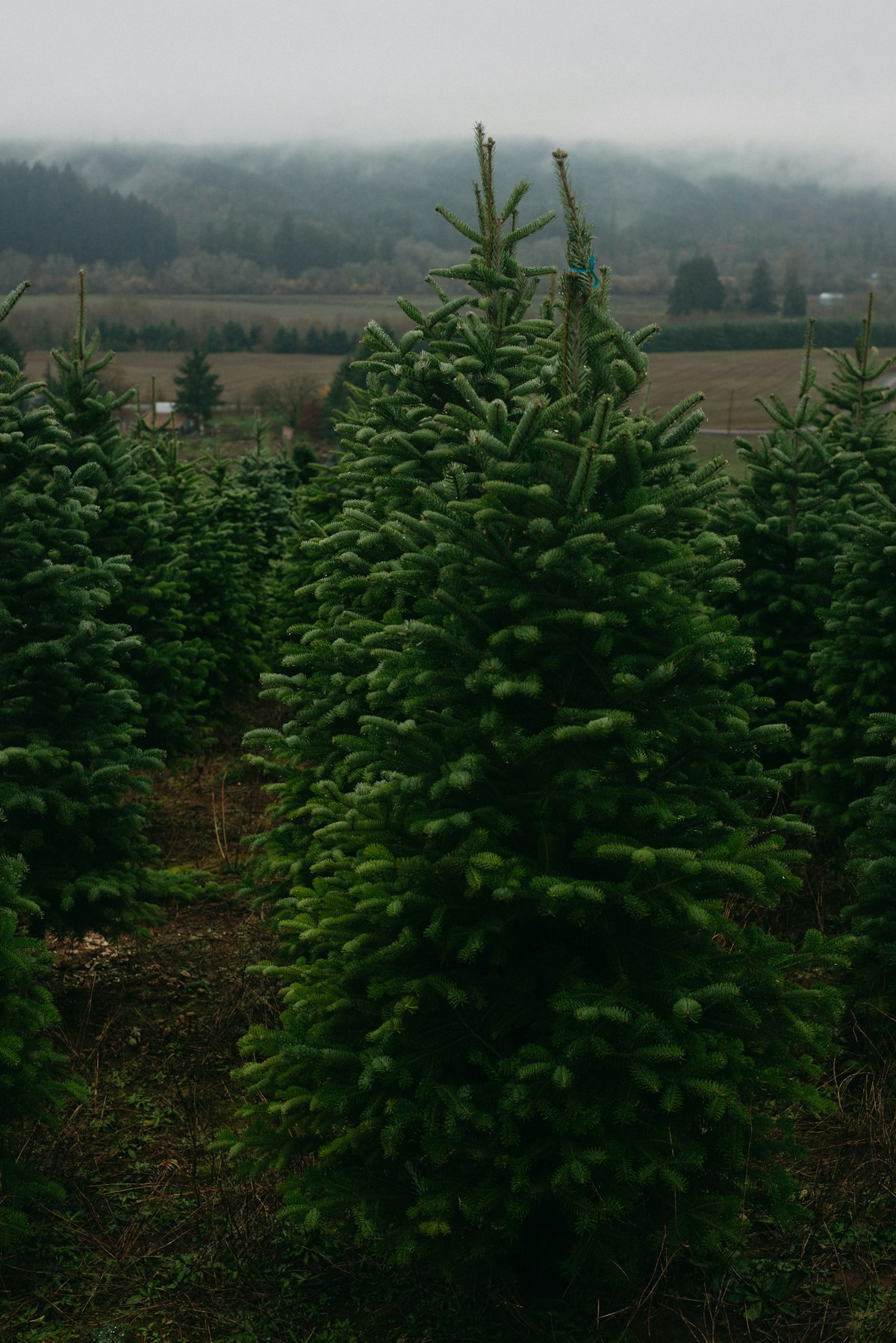
The trees are different, and buyers don't know it. Florida's sandy soil and heat grow sand pine, Southern red cedar, Leyland cypress and Carolina Sapphire, an Arizona cypress cultivar. The fir a family remembers from a childhood up north mostly isn't grown here, so many Florida farms bring in pre-cut firs alongside their own rows. A listing that doesn't say which trees are on the lot leaves the buyer guessing, and a guessing buyer goes to the place that shows a photo of the tree.
"Near me" means a day trip. For a family in Aventura, Brickell or Kendall, the nearest choose-and-cut farm is hours away. They aren't comparing two farms ten minutes apart. They're deciding whether the trip is worth a Saturday. A farm that only says "open daily 9–5" hasn't answered that.
The lots are better at listings than the farms are. Seasonal lots, garden centers and big-box stores run on corporate profiles with fresh photos, accurate hours and thousands of reviews. A family farm often has a Business Profile last touched three Decembers ago, filed under "Farm," with a phone number that rings a house.
The playbook
1. File the farm under the category the buyer is searching
Google matches "christmas tree farm near me" heavily against the Business Profile category. Google Business Profile has a category called exactly Christmas tree farm. If your primary category is "Farm," "Tree farm," "Plant nursery" or "Garden center," you're asking Google to guess. Set Christmas tree farm as the primary category for the season. If the same property runs a pumpkin patch in October or strawberries in spring, keep those as secondary categories and swap the primary around the first of November. Change it before the November spike, not during it. Profile edits can take days to settle, and Thanksgiving weekend is when the farm searches pile up.
2. Say which trees are on the lot, with prices by height
"Do they even have real trees in Florida?" is the question a South Florida family is actually asking. Answer it in three places.
- Business description: one sentence naming the species you grow and whether you also carry pre-cut firs, for example: "Choose-and-cut sand pine, red cedar and Leyland cypress grown on our farm, plus pre-cut Fraser firs."
- Products in the Business Profile: one product per tree type, with a photo of that tree in your field and a price range by height. Products show on the profile in Maps and give the buyer something concrete to compare against the lot.
- A season page on your website with the same information plus a short FAQ: Do you provide saws? Do you net and tie the tree? Card or cash? Are dogs allowed? How tall do the trees get? AI assistants answer "is there a christmas tree farm near Tampa" from pages like this, and a page that answers plainly is the one they quote.
3. Answer "is it worth the drive" before anyone asks
For a family in Doral or Coral Gables, your real competitor is the lot ten minutes from home, not the farm down the road. Make the trip easy to say yes to. On the season page and in a pinned Business Profile post, put the drive time from the cities your visitors come from (Miami, Fort Lauderdale, Tampa, Orlando, Gainesville), how long a visit usually takes, and what happens while they're there: hayride, hot cider, photo spot, kids' area, gift shop. Then name the best time to come, for example "Weekday mornings in the first week of December: full selection, no line." That turns a vague maybe into a plan, and a plan gets made in November.
4. Post what's left, and close loudly
Florida farms sell through their tall trees first, and they often close before Christmas because the field is picked over. The worst outcome is a family that drove three hours to find the gate chained. Once a week during the season, post a short Business Profile update with the date and what's left on the lot: "Dec 8: plenty of 5–7 ft red cedar, few Leylands over 8 ft, pre-cut firs sold out." On the day you close, set your hours to closed for the rest of the season and post it. Google shows hours on the profile, and an honest "closed" protects the reviews you collected all season from one angry one-star.
5. Let the visitors take the photos that sell next year
Choose-and-cut is a photo-heavy activity: kids with a saw, a tree tied to an SUV roof, the family in a row of cedars. Those photos are your best advertising if they land on your profile instead of only on someone's camera roll. Put a small sign at the checkout and the photo spot: "Share your tree on Google, the link is on this QR." Point the QR code at your profile's review link, where visitors can add photos with their review. Fresh photos of real families at your farm answer the "real trees in Florida?" question better than anything you could write. When the season ends, update the season page with next year's opening date, the day after Thanksgiving, and keep it live. Next November's 22,200 searches start in October.
What good looks like
Business description (first 250 characters):
Family-run choose-and-cut Christmas tree farm in [county], Florida. We grow sand pine, red cedar and Leyland cypress, and carry pre-cut Fraser firs. Saws, netting and loading included. Open the day after Thanksgiving until sold out. About 90 minutes from Tampa.
Weekly season post:
Saturday, Dec 6: plenty of 5–7 ft red cedar and sand pine, a dozen Leylands over 8 ft, pre-cut firs down to the last 20. Hayrides 10–4. Shortest line: before 11 a.m.
Closing post:
The field is picked for 2026: we're closed for the season. Thank you to the [number] families who cut a tree with us this year. See you the day after Thanksgiving 2027.
None of these takes more than ten minutes. Together they cover the questions a buyer has before choosing a farm: is it real, is it open, is it worth the trip, what's left.
Where to start
If the season has already started, do the first two steps today: the category and the species line in the description. Both show up in search within days, and the December searches are still ahead. Everything else can be built in the slow months and switched on next November.
If you want to know exactly how your farm shows up for "christmas tree farm near me" from Tampa, Orlando or Miami, what your profile is missing and which lot is winning your searches, ask for our free five-page audit, 48 hours, no sales call.