The storm passes in a day. The listing stays wrong for three weeks. That gap — between the moment the wind stops and the moment Google, Apple Maps and Instagram agree that you are open again — is where Florida independent restaurants quietly lose a month of covers. Not to flooding. Not to a broken walk-in. To a set of hours nobody updated.
We are in the loudest stretch of the calendar right now. The Atlantic hurricane season runs June 1 through November 30, and the National Hurricane Center puts the peak between mid-August and mid-October. Whatever this season does, the digital part of it is entirely within your control — and it is almost always the part that goes unmanaged.
The math
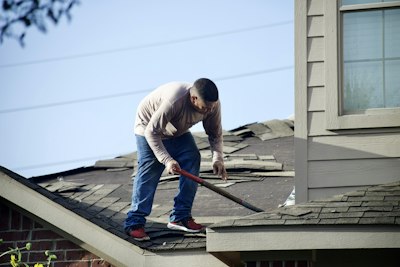
Start with the forecast. NOAA's 2026 outlook calls for 8 to 14 named storms, 3 to 6 of them hurricanes and 1 to 3 major hurricanes, with a 55% chance of a below-normal season. That is a genuinely quieter forecast than the last few years — and it is exactly why most owners will skip preparation this year. A below-normal season is not a zero season. One storm that tracks over Miami-Dade or up the Gulf side does the same damage to your fall as six.
Then the survival number. FEMA's widely cited estimate is that roughly 40% of small businesses never reopen after a natural disaster, and another 25% fail within a year of reopening. Restaurants sit in the worst quadrant of that statistic: thin margins, perishable inventory, hourly staff who cannot wait out a two-week closure, and a customer habit that transfers to a competitor in a single weekend.
And the demand signal. Search Engine Land's roundup of Google restaurant search trends found that "food near me open now" grew 875% year over year — the single fastest-moving restaurant query pattern Google has published. During and after a storm, that behavior does not soften. It intensifies. Power is out in one neighborhood and fine three blocks away, half the block is dark, and every hungry person within five miles is filtering by open now.
The filter is binary. Either your hours say you are open, or you do not exist for that search. There is no partial credit for "we posted it on Instagram."
Why Florida indies specifically
Three reasons this hits our segment harder than it hits the chains.
Chains have a hours desk. You have a closing manager. A national brand updates 400 locations from one dashboard the moment a county issues an evacuation order. A Cuban ventanita in Westchester, a Neapolitan room in Coral Gables, a Middle Eastern grill in Aventura — those hours live in one owner's head, and that owner is currently moving patio furniture indoors.
Your guests are split across languages and platforms. A Doral dining room's regulars may be checking a WhatsApp group in Spanish while tourists in Brickell check Google in English and a French-speaking family in Sunny Isles checks Apple Maps. Posting "we're open!" in one language on one channel reaches perhaps a third of the people who wanted to come.
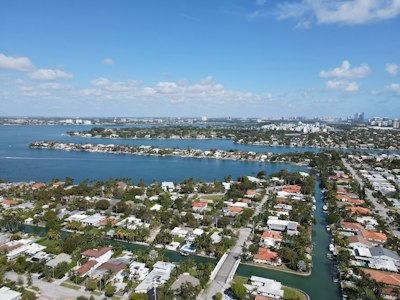
Recovery is uneven and local. Florida rarely goes fully dark. FPL restores by grid segment, so the map after a storm looks like a patchwork — your street has power, the street behind you doesn't. That patchwork is precisely what search is for, and precisely what stale data destroys. Guests do not assume you're open because the sun came out. They check, they see last week's hours or a "temporarily closed" flag nobody removed, and they book somewhere else.
The storm-season playbook
Step one: build the hours map before the cone appears
Write down every place your hours are published. For most Florida independents the honest list runs longer than expected: Google Business Profile, Apple Business Connect, Yelp, Facebook, Instagram bio, your own website footer, your reservation platform, DoorDash, Uber Eats, and any menu aggregator that scraped you three years ago. Put the list in one document with a login for each. Ten minutes now; forty minutes of panic saved later.
Step two: use special hours, not temporary closure
Google Business Profile and Apple Business Connect both support special hours — dated overrides for a specific day. That is the correct tool for a storm closure of one to three days. It tells the platform exactly when you're dark and, crucially, exactly when you're back, so the listing repairs itself automatically. Reserve the "temporarily closed" flag for closures measured in weeks, and set a calendar reminder to remove it the day you reopen. A "temporarily closed" label left up for a month is the single most expensive piece of neglected data in this industry.
Step three: post the closure and the reopening as separate events
Owners post "closing tonight, stay safe." Almost nobody posts the second half. Publish a Google Post and an Instagram post for each of three moments: we're closing, we're assessing, and we're open. The third one is the one that fills tables. Include the date, the hours, and one concrete detail — kitchen fully operational, limited menu, cash only, patio only. Specific beats reassuring.
Step four: write the messages before the storm, in every language you serve
Nobody writes well without power. Draft the three notices now, in English and Spanish at minimum, plus whatever your room actually speaks — Italian in a Coral Gables trattoria, French in a Sunny Isles bistro, Russian in a Hallandale spot. Store them in a note on your phone. During the event, you are copying and pasting, not composing.
Step five: protect the email and SMS list you already own
Social feeds are algorithmic; a reopening post competes with every other post in the county. Your guest email and SMS list is direct and unfiltered, and it is the one channel that works when your Instagram reach collapses. One message before the storm, one when you reopen. Restaurants that spend the season building that list are the ones who can fill a Thursday five days after a hurricane while the block is still quiet.
What good looks like
The closing notice. "We're closing at 4 PM Thursday, August 14, ahead of the storm and expect to reopen Saturday. Stay safe — we'll confirm here and on Google before we unlock the door." / "Cerramos el jueves 14 de agosto a las 4 PM por la tormenta. Esperamos reabrir el sábado y lo confirmaremos aquí."
The reopening notice. "We're open. Saturday, August 16, 11 AM to 9 PM. Full kitchen, full menu, air conditioning working. Walk-ins welcome — no reservation needed today." One post, three facts, no adjectives. This is the message that converts.
The listing state. Special hours set on Google and Apple for the closed days, dated, with normal hours resuming automatically. No "temporarily closed" flag. Delivery apps paused rather than left live to collect orders you cannot cook — a storm-night order that never arrives becomes a one-star review that outlives the storm by two years.
The unglamorous conclusion
Storm preparation for a restaurant is usually framed as sandbags, generators and freezer plans. Those matter, and you already know them. The part almost nobody schedules is the twenty minutes of data work that determines whether your first week back is full or empty — because the guests who wanted to come never stopped wanting to. They just asked a phone, and the phone answered with last week's information.
Do it in August, before the cone shows up on the evening news. Build the hours map, draft the three notices, learn where special hours live on Google and Apple. It is the cheapest resilience you will buy this year.
If you'd like to see exactly where your restaurant's hours, listings and profiles currently disagree with each other, we'll show you: a free five-page audit, 48 hours, no sales call. Request it here.
Sources: NOAA 2026 Atlantic hurricane season outlook (May 2026); National Hurricane Center season dates; FEMA small-business disaster reopening estimates; Search Engine Land, Google restaurant search trends 2025.